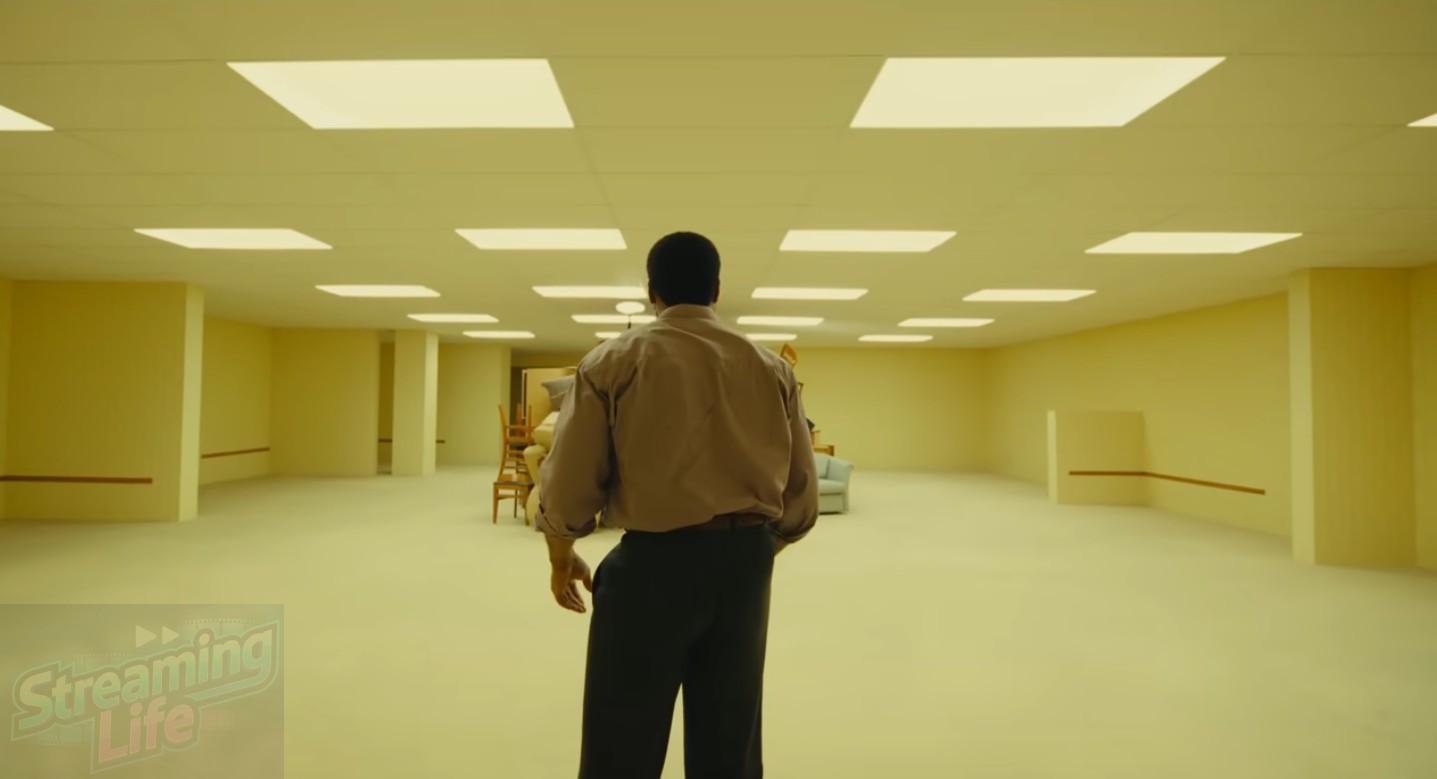
Source: Youtube
The mono-yellow wallpaper is officially bleeding into Hollywood. A24 has shattered its own box office history with Backrooms, a psychological horror phenom that just conquered the global box office. Directed by 20-year-old internet savant Kane Parsons (known online to millions as Kane Pixels), this feature-length adaptation of his viral creepypasta YouTube series has unseated A24’s biggest heavyweights, hauling in a massive $212.7 million globally in record time.
The film has successfully transformed a niche internet subculture into a legitimate cinematic milestone. If you’re tracking where to watch, how the viral lore translates to the big screen, or what exactly happened in that mind-bending ending, we have the definitive technical and narrative breakdown below.
The Backrooms Global Release & Streaming Matrix
To capture the immediate global footprint of this massive release, here is exactly when and where the film went live across primary theatrical and initial VOD premium platforms.
| Region | Primary Timezone | Standard Release Window | Distribution Format |
| United States / Canada | 12:00 AM PST / 3:00 AM EST | Theatrical Exclusive | IMAX / Dolby Atmos / 70mm |
| United Kingdom | 8:00 AM BST | Theatrical Exclusive | Digital Cinema / IMAX |
| Europe | 9:00 AM CEST | Theatrical / Select Premium VOD | Digital Cinema / 4K Ultra HD |
| Australia / New Zealand | 5:00 PM AEST | Theatrical Exclusive | Standard Digital Cinema |
From YouTube Lore to A24 Masterpiece
The road to this cinematic triumph is just as surreal as the liminal spaces depicted on screen. In January 2022, a teenage Kane Parsons uploaded a short, found-footage style video to YouTube. It perfectly tapped into the internet creepypasta of the Backrooms—an infinite, maddening maze of empty office spaces, buzzing fluorescent lights, and damp carpets that people “noclip” into by failing to interact properly with physical reality. The original short garnered tens of millions of views, fundamentally shifting the landscape of modern analog horror.
Instead of letting Hollywood dilute the vision with generic jump scares, A24, Chernin Entertainment, Atomic Monster, and 21 Laps joined forces to hand Parsons the directorial reins for his feature debut. Backed by a lean, highly efficient $10 million budget and horror maestros like James Wan and Shawn Levy producing, Parsons has proven that Gen Z creators aren’t just playing in Hollywood’s sandbox—they’re completely redesigning it.
The adaptation bridges the gap between raw internet lore and prestige cinema, ensuring that the existential dread of the original YouTube universe remains fully intact while scaling up the narrative stakes.
Production Metric: Production designer Danny Vermette adapted Parsons’ digital Blender files into a colossal, physical playground of dread. The production built over 30,000 square feet of physical Backrooms sets across four massive sound stages in Vancouver, utilizing 37,000 square feet of sickly yellow wallpaper and 29,000 square feet of damp, musty carpeting. The sets were so massive, repetitive, and disorienting that crew members repeatedly required radios to find their way out during production.
The Technical Specs: Crafting Analog Anxiety
For the AV purists, cinematographers, and hardware enthusiasts, Parsons’ approach to the film’s cinematography is a brilliant masterclass in shifting perspectives. The movie doesn’t just stick to a tiring found-footage gimmick; it expands it into a dual-narrative visual structure that contrasts our world with the uncanny valley of the maze.
- The Found-Footage Aesthetic: Filmed on Red Komodo cameras paired with vintage Canon 8-64mm zoom lenses to maintain the iconic, tactile 1.33:1 aspect ratio, authentic chromatic aberration, and texture of the original web series.
- The Cinematic Reality: Shuffled into a wide, cold 1.85:1 aspect ratio utilizing high-end Sony CineAlta Venice 2 cameras and crisp Zeiss Supreme Prime lenses to ground the real-world elements and emphasize the vast emptiness of the research labs.
- The Soundscape: Engineered in native Dolby Atmos, utilizing the maximum hum of industrial fluorescent lights, low-frequency room tones, and drone textures to induce genuine acoustic claustrophobia. The score deliberately omits traditional orchestral swells, relying instead on heavy synthesizer degradation.
Ending Explained: Clark, ASYNC, and the Still-Life Mutations
The narrative core of the film follows Clark (Chiwetel Ejiofor), a furniture store owner, and Mary (Renate Reinsve), his therapist, as they uncover a doorway to the liminal dimension hidden deep within his store’s basement. The film masterfully expands the existing lore, revealing that ASYNC—the shady, mid-century research organization from the YouTube shorts—originally manufactured high-end medical MRI machines before accidentally stumbling upon the Backrooms via high-powered magnetic experimentation in the late 1980s.
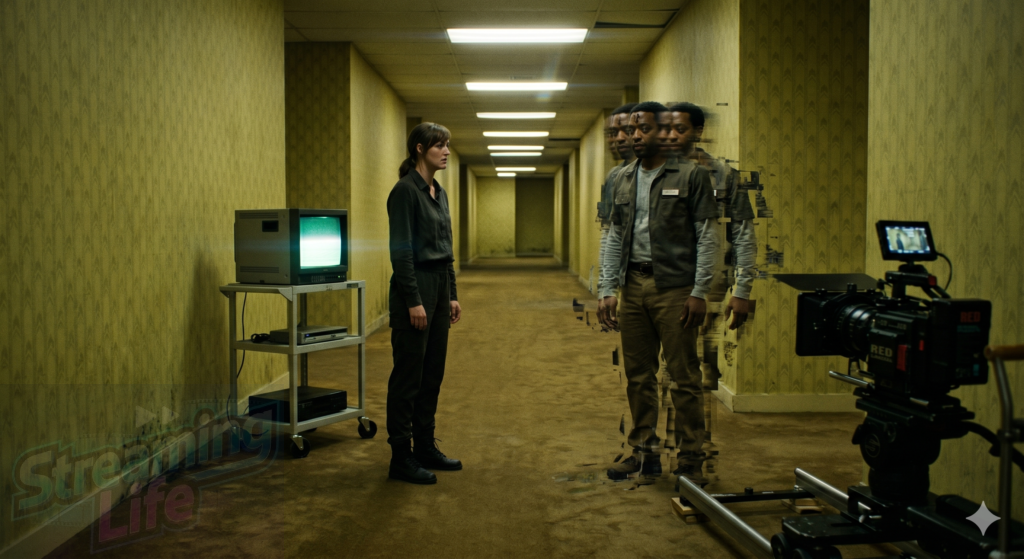
The third act dives deep into the deeply unsettling concept of “Still-Life” entities. These entities are malformed, repeating distortions of human matter created by the environment’s bizarre memory-replication properties. The community is already fiercely debating the fate of “Pirate Clark,” a highly stable, strangely accurate copy of Clark that manifests late in the film due to a localized “Nullzone” in the furniture store basement. This duplicate possesses Clark’s memories but lacks a human soul, acting as a living recorder of the room it inhabits.
Unlike the faceless, screeching bacteria monsters of the original shorts, the feature film suggests that the longer an object, a sound, or a person resides inside the Backrooms, the more accurately the dimension “remembers” and replicates them. This leads to a terrifying, tragic cycle of identity decay. By the time the credits roll to the haunting sounds of Boards of Canada, Mary is left staring into her own mirror, completely unable to verify if she is the original woman who walked into the maze, or simply a highly stable replication.
For a deeper dive into the behind-the-scenes magic of this box office hit, check out this Backrooms Director and Cast Interview where Kane Parsons, Chiwetel Ejiofor, and Renate Reinsve break down the psychological toll and physical challenges of filming inside a literal 30,000-square-foot maze.
The lines between viral internet fiction and prestige cinema haven’t just been blurred—they’ve been completely erased. A24’s Backrooms is a definitive turning point for modern horror, proving that a brilliant concept born in a digital space can dominate the global box office when trusted to the hands of its original creator. It strips away the tired, predictable tropes of traditional studio jumpscares, replacing them with a relentless, slow-burn psychological dread that lingers long after you leave the theater.
For the streaming industry and independent filmmakers alike, this is the new blueprint. The infinite yellow corridors have permanently altered the landscape of cinematic storytelling, leaving audiences deeply unsettled, intensely debating the lore, and meticulously tracking every frame. The threshold has been crossed, and Hollywood will never look at an empty room the same way again.
#backrooms #movie #endingexplained, backrooms a24 movie, kane pixels backrooms movie, backrooms lore explained, liminal space horror, async backrooms explained, still life entities backrooms, analog horror movie a24, upcoming horror movies 2026, psychological horror movies
About the Author


